The following story is extracted from our 2025 Annual Report, and relates how Ilifa and close partners worked with the Department of Basic Education to design and build South Africa’s digital management information system for ECD. A true first, eCares will ultimately take ECD administration from paper to digital. To read the full report, click here.
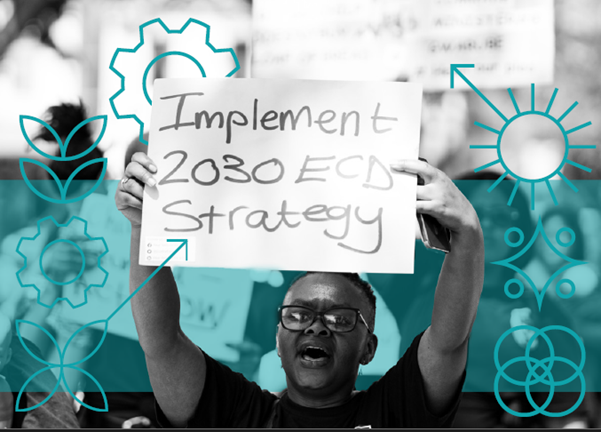
We have for years supported the idea of a digital management information system (MIS) for ECD and has spent time exploring its potential complexity in the local context. The ECD function shift from the Department of Social Development (DSD) to the DBE in 2022, followed by the release of the DBE’s 2030 Strategy for universal access, provided a runway for the MIS to take flight. The government agreed that improving access to and the quality of ELPs would be impossible without dramatically improving data access and administrative systems. In 2023, with support from the The LEGO Foundation, the Department of Basic Education, we began to build a comprehensive set of requirements for a national ECD MIS – now called the Early Childhood Administration & Reporting System (eCares).
Digital wings for Bana Pele to fly
The launch of Bana Pele in 2024 turbocharged the development and implementation of eCares. The newly built MIS enabled ELPs to register online for the first time ever and provided the national-level Bana Pele Project Management Unit and the provinces with a real-time view of the thousands of ELPs entering the regulatory net.
As Bana Pele’s focus has expanded to systemic reform of the Bronze-Silver-Gold registration process, eCares has added further functionality to support the growing needs of the ecosystem. The key third stage of the registration process (the point at which an ELP attains Silver/Gold registration and can apply for subsidies) was designed, consulted on, and built into eCares in 2025. With the full end-to-end registration processes now fully digitised, the system offers a complete and streamlined registration workflow.
A new way to administer and plan ECD operations
eCares marks a significant shift in how ELPs engage with government systems. It streamlines and standardises business processes, enables communication between the DBE and ELPs, and gathers data to inform immediate operational decision-making and long-term planning. Linked to the underlying data in the system, a suite of dashboards provide a real-time view of what is happening in the system at a district, provincial, and national level across all of the relevant administrative process – giving a view of where applicants are dropping off in the registration process, and where additional support is needed.
Below are some examples of how the data is already being used to guide strategic decisions:
- Viewable and downloadable lists of every registered ELP in South Africa are linked to the full set of DBE’s reporting requirements.
- eCares generated bi-weekly lists of incomplete Bronze registration ELPs to be used by the Bana Pele call centre for targeted support.
- eCares dashboards allowed government officials to view where ELPs were stuck in the registration process, and enabled monitoring of the processing workload of frontline officials.
- Data from eCares guided the DBE on which ELPs to prioritise when allocating maintenance grant funding, and to guide allocation of health and safety packs.
eCares is now firmly embedded in the DBE’s ways of working, priorities, and systems. Provincial education department officials in all provinces have been trained as new functionality is built into the system. Importantly, the DBE has allocated significant funding towards implementing Bana Pele and eCares over the medium term. We will continue to support the iteration of eCares and its future capabilities, which include subsidy administration and reporting, as well as its integration and interoperability with adjacent government digital systems.
eCares demonstrates the value of bringing together partners with diverse strengths – leadership from government, implementation and innovation capacity from civil society, technical expertise from the private sector, and catalytic financing from philanthropy.